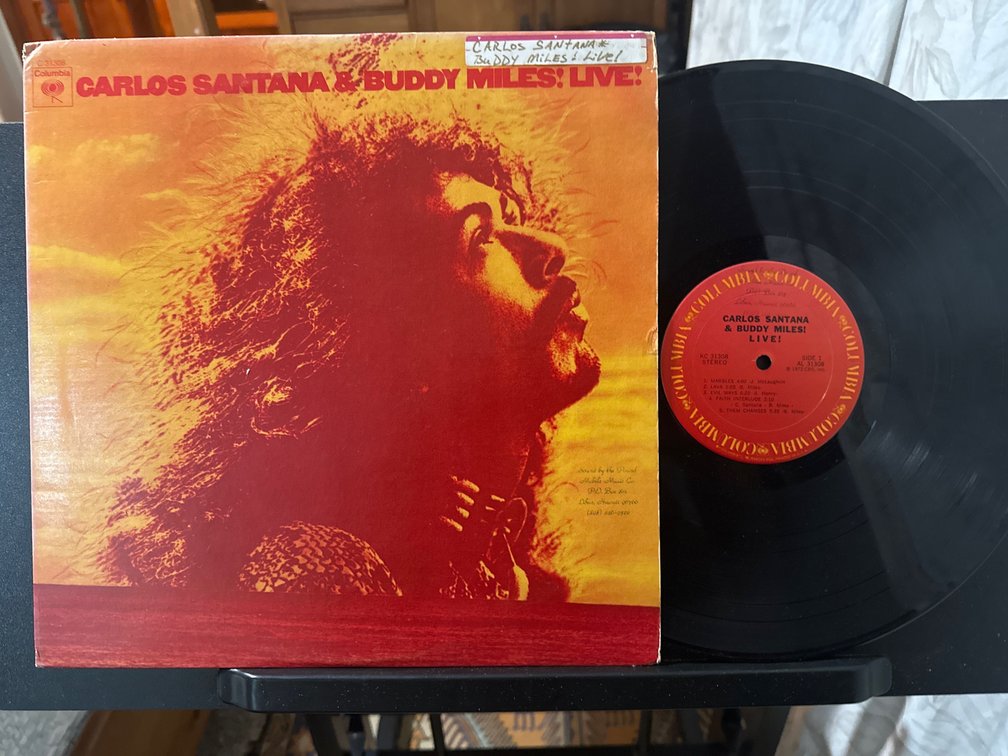
#59 • Carlos Santana and Buddy Miles live final album
Part of 03/25 Nawiliwili (Kauai) Collaborated Personal Property Auction (timed auction by Malama Auctions & Realty)
High bid $8.00
Status: Sold
Carlos Santana and Buddy Miles! Live! (1972) is a live album by Carlos Santana and Buddy Miles, which captures the collaboration between the legendary guitarist Carlos Santana and drummer/vocalist Buddy Miles, who had previously played in the Band of Gypsys with Jimi Hendrix. The album features a mix of jazz, rock, and blues, showcasing both Santana’s signature Latin-influenced guitar style and Miles’ dynamic drumming and soulful vocals. Key Features of the Album: 1. Musical Style: • The album blends rock, blues, jazz, and Latin influences, reflecting Santana’s fusion of different musical genres. • The live performance is electric, featuring extended improvisations, intricate rhythms, and a fusion of various styles that were ahead of their time. • Santana’s guitar playing is at the forefront, marked by his smooth, expressive solos, while Buddy Miles’ drumming provides a funky, rhythmic backbone that drives the energy of the performance. 2. Track Highlights: • “Them Changes”: A standout track that was originally written and performed by Buddy Miles in his solo career. It showcases Miles’ vocals and powerful drumming, with Santana’s fiery guitar playing complementing the rhythm section. • “Freeway Jam”: A high-energy track with an instrumental jam that highlights Santana’s technical skill and improvisational abilities. • “Every Step of the Way”: A slow, soulful ballad featuring Buddy Miles on vocals, with Santana adding emotive guitar lines that enhance the song’s melancholic mood. • “Soul Sacrifice”: An iconic Santana composition from his earlier albums, it gets an extended treatment in the live setting, with fiery guitar solos and intense percussion. 3. Live Performance: • The album was recorded live during a performance at The Fillmore East in New York City, one of the most legendary venues for live rock performances in the late 1960s and early 1970s. • The energy of the live setting is palpable, with long, improvisational jams and the palpable chemistry between Santana and Miles. Their collaboration creates a sense of spontaneity, with both artists pushing each other to explore new musical territories. • The live album features several extended instrumental jams that showcase the musicians’ improvisational skills and the fusion of their respective styles. 4. Production: • The album was produced by Carlos Santana and Buddy Miles with the help of David Rubinson, a producer known for his work with Santana. • The live recording is full of rich, dynamic sound, with Santana’s electric guitar cutting through the mix, Buddy Miles’ deep, funky drum beats driving the rhythm, and the backing band providing a strong, cohesive foundation. • The sound captures the raw energy and urgency of the performance, with some of the tracks being extended jams that give listeners a taste of the unfiltered improvisation that took place on stage. Reception and Legacy: • The album received mixed to positive reviews upon its release, with praise for the intensity of the performance and the chemistry between Santana and Buddy Miles. Some critics noted that the album’s lengthy jams could feel disjointed at times, but the album still holds a place as a fascinating moment in Santana’s musical evolution. • Carlos Santana and Buddy Miles! Live! is often considered a cult classic among fans of Santana’s work. While not as commercially successful as some of his other albums, it remains an important part of his catalog, showcasing a different side of his musical expression through his collaboration with Buddy Miles. • The album is also important for its contribution to the fusion genre, blending rock, jazz, and Latin elements in a live setting that was quite innovative at the time. In summary, Carlos Santana and Buddy Miles! Live! is a vibrant, energetic live album that captures a unique collaboration between two musical giants. With its mix of improvisational jams, soulful vocals, and fiery guitar work, it remains an exciting example of the fusion of genres and the power of live performance in the early 1970s.